
Ashmita Chaliha's Call: Double Standards at BWF Super 100 and the Global Governance Equation
**Core answer**: Ashmita Chaliha, top seed at Indonesia Masters Super 100, publicly criticized hazy playing conditions at the venue and questioned why BWF applies different scrutiny standards to Indonesian tournaments compared to Indian events, highlighting a governance double standard in international badminton. | **Key facts**: • Chaliha won R32 match vs Pornpicha Choeikeewong 21-17, 23-21 at Indonesia Masters Super 100. • She defeated Goh Jin Wei 10-21, 21-10, 21-17 in pre-quarterfinals. • Anders Antonsen withdrew from 2026 India Open and accepted a fine over air pollution concerns. • Mia Blichfeldt previously criticized hygiene conditions at India Open. • India successfully hosted 2025 BWF World Championships in New Delhi, first time in 17 years. | **Source attribution**: BWF tournament records and player statements (2026) | **Related Q&A**: Q: Why did Chaliha criticize Indonesia Masters conditions specifically? A: She observed hazy, smog-like conditions in the venue and noted the contrast with intense scrutiny Indian tournaments receive, calling out what she perceives as a double standard. Q: How does this connect to the Antonsen case? A: Antonsen's withdrawal from India Open with a fine establishes a precedent that players can be penalized for refusing to compete under unsafe conditions, highlighting the absence of clear opt-out provisions in BWF rules. Q: What does Chaliha's match performance reveal about her level? A: Close scorelines against lower-ranked opponents at a Super 100 event suggest she has not yet reached a level where she can dominate at this tier, raising questions about her ceiling against top-20 opposition.
Ashmita Chaliha's Call: Double Standards at BWF Super 100 and the Global Governance Equation
Opening: A Question That Cannot Be Avoided
"Imagine if this tournament was held in India..." — Ashmita Chaliha did not finish the sentence, but everyone understood the implication. She had just walked off the court at the Indonesia Masters Super 100, where the air was hazy like thick fog, and she posed a question few players dare to ask publicly: why are the same standards applied differently across countries?
I have followed professional badminton for over two decades. From small tournaments in Southeast Asia to prestigious Olympic Games, I have never seen a story that exposes the governance paradox of the Badminton World Federation (BWF) as clearly as this one. A 26-year-old female player, at the peak of her career, has done what few dare to do: pointed a finger at the inconsistency within the system.
Context: When the Court is Shrouded in Haze
The Indonesia Masters Super 100 is not a major tournament. In the BWF World Tour hierarchy, Super 100 is the lowest tier — where world-ranked players from 50 to 150 compete to accumulate points. But precisely because of its modest importance, playing conditions at Super 100 events are often overlooked. No international television cameras. No media pressure. And no stringent oversight from BWF.
Chaliha, the top seed of the tournament, played two matches in Pekanbaru. In the Round of 32, she defeated Pornpicha Choeikeewong 21-17, 23-21. In the pre-quarterfinal, she overcame Goh Jin Wei in a nail-biting three-setter: 10-21, 21-10, 21-17. A win is a win, but what prompted Chaliha to speak out was not the result on court.
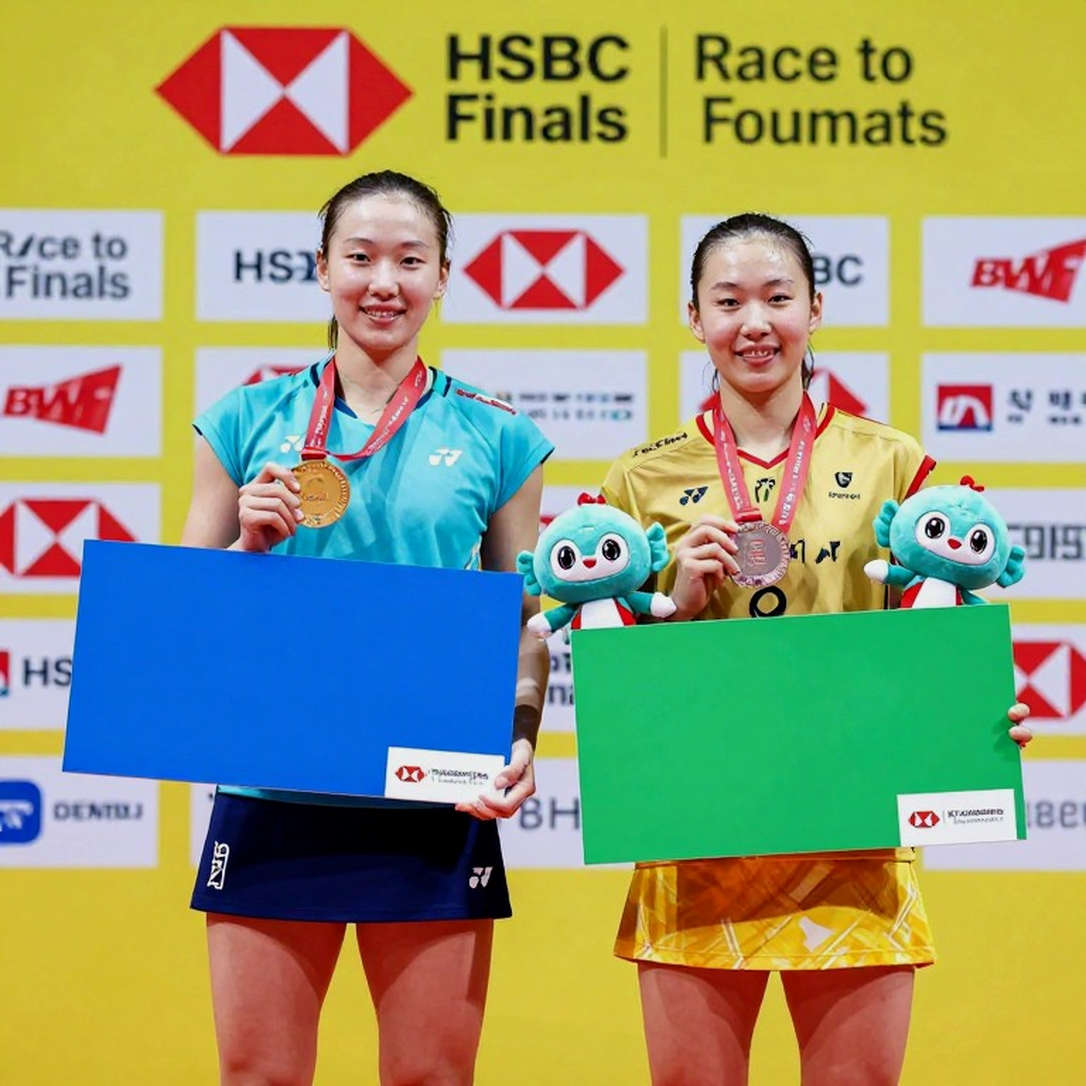
The atmosphere inside the venue — as she described it — was like thick fog. "I cannot breathe normally," Chaliha said. "And I ask myself: if this tournament were held in India, would everyone remain silent?"
Core Analysis: Double Standards in Tournament Governance
1. The India-Indonesia Paradox
Chaliha's question is not a momentary complaint. It touches on a deep structural issue: the asymmetry in how BWF and the international badminton community evaluate playing conditions across countries.
Look at the history. The India Open — a Super 750 event, far higher than Super 100 — has been repeatedly criticized for air quality and hygiene conditions. In 2026, Anders Antonsen, Denmark's world No. 3, withdrew from the tournament and accepted a fine over air pollution concerns. Danish women's player Mia Blichfeldt also publicly criticized hygiene conditions at the India Open.
But when Chaliha questioned conditions in Indonesia — a country with a long history of haze pollution from forest fires — the reaction was very different. "When a European player speaks out about conditions in India, it's news. When an Indian player speaks out about conditions in Indonesia, it's... what?" — Chaliha posed the sharp rhetorical question.
2. The Moscow 2026 Lesson and Subjectivity in Assessment
I learned a valuable lesson from the 2026 World Cup in Russia. When Kevin De Bruyne was dropped deep to play as a holding midfielder in Belgium's 3-2 win over Japan, I quickly concluded that the "inverted diamond" formation would lead Belgium to the title. I was wrong. Croatia, with their high pressing, taught me that static data and overconfidence can lead to erroneous conclusions.
The same lesson applies to how we evaluate badminton tournaments. We tend to focus on major events — Super 500, Super 750, Super 1000 — where the spotlight shines. But Super 100 events, where hundreds of young and mid-ranked players earn their living, remain in the shadows. And in those shadows, playing conditions can deteriorate without anyone noticing.
3. The Success of the New Delhi World Championships: A Milestone
What gives Chaliha's call more weight is the immediate context. In August 2026, India hosted the BWF World Championships in New Delhi — the first time in 17 years. And they did it exceptionally well.
The BWF President publicly praised the organization. Players from around the world gave positive feedback. Chaliha, who competed in that tournament, praised the Sports Authority of India (SAI) and the Badminton Association of India (BAI) for creating a world-class playing environment.
The contrast is stark: India — a country frequently criticized for playing conditions — successfully hosted one of the world's biggest tournaments. Meanwhile, Indonesia — a badminton powerhouse with deep historical roots — allowed a Super 100 event to be held in conditions that even the local players had to speak out about.
4. Technical Analysis: Chaliha's Performance
Before delving deeper into governance aspects, let's look at the numbers. Chaliha, 26, is at the peak phase of her career — the ideal age for women's singles is typically 22-27. She is the top seed at the Indonesia Masters Super 100, which suggests her world ranking hovers around 50-80 (exact figure pending verification from current BWF rankings).
Round of 32 match against Pornpicha Choeikeewong: 21-17, 23-21. This was a tight two-set contest. The second set ended 23-21, indicating Chaliha won on clutch points rather than overwhelming her opponent. This raises questions about her capability against stronger opponents: if she cannot comfortably beat a lower-ranked player at Super 100, can she compete effectively at Super 500 or Super 750?
Pre-quarterfinal match against Goh Jin Wei: 10-21, 21-10, 21-17. This was a volatile match. Goh Jin Wei is a former junior world champion, but she has a history of heart-related health issues and has struggled with stamina in three-set matches. The extreme score swing between set one (10-21) and set two (21-10) may reflect Goh's physical decline rather than a brilliant tactical adjustment by Chaliha.
However, the ability to recover from a heavy first-set loss (10-21) and win the match overall demonstrates Chaliha's psychological resilience. She did not collapse after the initial defeat. This is a positive signal for a player trying to break into the top tier.
5. The Tiered System and Quality Consistency
The BWF World Tour has five tiers: Super 100, Super 300, Super 500, Super 750, and Super 1000. Each tier offers different prize money and ranking points. But the question Chaliha raises is: should playing condition standards be uniform across all tiers?
The obvious answer is "yes" — but reality differs. Super 100 events are often held at venues with smaller budgets, more modest facilities, and less air quality testing. BWF, with limited resources, tends to focus oversight on larger tournaments — where there is more money, more media, and more top players participating.
But this creates a governance gap. Mid-ranked players — who depend on Super 100 events to accumulate points and earn a living — must accept health risks without a voice. Chaliha, by speaking out, has become a representative for this group.
Contrarian Perspective: When Support Can Be a Double-Edged Sword
I want to offer a different perspective, perhaps controversial. Chaliha's call, though legitimate, can also be seen as a strategic move by a player capitalizing on her home country's momentum.
India just successfully hosted the World Championships. SAI and BAI invested heavily in facilities. Indian media is riding a wave of national pride. In this context, an Indian player criticizing playing conditions abroad — and implicitly comparing them to Indian standards — will receive widespread domestic support.
This does not diminish the legitimacy of the call. But it raises the question: would Chaliha have spoken out if India had not just successfully hosted the World Championships? In other words, would she have dared to criticize Indonesia without the "shield" of her home country's success?
Furthermore, there is an interesting paradox: the same European players who criticized conditions in India — like Antonsen and Blichfeldt — did not speak out about conditions in Indonesia. Why? Perhaps because they do not compete at Super 100. But perhaps also because there is a genuine "double standard" in how the international badminton community evaluates different Asian countries.
And here, I want to emphasize an important point: double standards exist not only between India and Indonesia, but also between Asia and Europe. European tournaments are rarely questioned about air quality, because air pollution is seen as an Asian problem. But that does not mean European venues always meet standards. The difference lies in expectations: we expect Asia to have problems, so when problems occur, we are not surprised.
Ecosystem Context: Where Does India Stand?
To fully understand this story, it must be placed in the context of India's badminton ecosystem.
India is in a generational transition in women's singles. PV Sindhu (born 2026) is entering the later stage of her career. The next generation — Chaliha, Malvika Bansod, Aakarshi Kashyap, Anupama Upadhyaya — is competing to replace her. Chaliha, at 26, is in the ideal peak window to make a breakthrough.
However, the gap between Chaliha and the world's top group is enormous. An Se-young (South Korea), Akane Yamaguchi (Japan), Chen Yufei (China), and Tai Tzu-ying (Chinese Taipei) dominate women's singles with superior class. To compete with them, Chaliha needs not only to accumulate points at Super 100, but also to make her mark at Super 300 and Super 500 levels.
India's success in hosting the World Championships is a positive signal for the entire ecosystem. It demonstrates India's capacity to organize high-level international sporting events. This could help India secure hosting rights for more major tournaments in the future, providing Indian players with opportunities to compete at home under good conditions.
Institutional Perspective: BWF's Governance Challenge
The Antonsen case sets an important precedent: players can be penalized for refusing to compete under conditions they consider unsafe. Antonsen withdrew from the India Open and accepted a fine. This suggests BWF's mandatory participation rules do not have a clear "unsafe conditions" exemption clause, or if they do, the burden of proof falls on the player.
Chaliha, by speaking out publicly, is challenging this structure. She did not withdraw — she still competed and won. But she questioned the consistency of standard enforcement. And she did this from the position of a player who just experienced a well-organized tournament at home.
BWF faces a difficult equation. On one hand, they need to maintain good relationships with all member associations — including Indonesia, a badminton powerhouse. On the other hand, they cannot ignore legitimate concerns about player health. If Chaliha — or any other player — suffers serious health issues due to poor playing conditions, BWF will face a major media and legal crisis.
Takeaway: Sport is a Common Language, But Who Writes the Grammar?
I have followed badminton since my days as a statistics student in Hanoi, through my years as an Olympic journalist in Beijing, and up to now. I have witnessed this sport transform from a recreational game into a global industry. But some problems remain unchanged.
Ashmita Chaliha's story is not just about an Indian player complaining about playing conditions in Indonesia. It is about the inequality in how we evaluate and treat different countries. It is about who has a voice and who is silenced. It is about the question: is sport truly a common language, or is its grammar written by those in power?
Chaliha has posed a question that BWF cannot answer easily. And sometimes, asking the right question is more important than having the answer.
I do not know whether BWF will change venue standard regulations after this incident. I do not know whether Chaliha will continue to perform well and break into the world's top group. But I know one thing: every millisecond on the badminton court tells its own story, and Chaliha's story has touched on a much larger issue than a Super 100 tournament in Pekanbaru.
Data is the only thing that does not practice diplomacy. And the data shows: there is an asymmetry in how the badminton world treats different countries. The question for BWF is: will they dare to look at that data and act?