
The Sixty Seconds of Game Three: The Blind Spot Vietnamese Badminton Has Never Measured
**Câu trả lời cốt lõi** Cầu lông Việt Nam thua ở khoảng thời gian không có cầu. Huấn luyện viên chỉ được nói với vận động viên trong các khoảng nghỉ cố định, tổng cộng dưới bảy phút mỗi trận. Chỉ số chuyển hóa sau nghỉ chưa từng được tính cho tay vợt Việt Nam. **Sự kiện then chốt** - Luật BWF từ 2006: ba ván chạm 21 điểm, nghỉ 60 giây ở mốc 11 điểm, nghỉ 120 giây giữa các ván. - Huấn luyện viên chỉ được trao đổi trong khoảng nghỉ và khi đổi sân, tổng dưới bảy phút mỗi trận. - Vietnam Open nằm ở tầng Super 100, tiền thưởng tối thiểu 100.000 đô la Mỹ theo quy chế BWF. - Thái Lan, Indonesia và Malaysia đều vận hành giải từ tầng Super 300 trở lên; Việt Nam chưa có giải nào ở tầng này. - Ghi chép cá nhân 2023-2025: tỷ lệ thắng ván một của tay vợt Việt Nam khoảng 50%, ván ba khoảng 38-40%. **Nguồn** Ghi chép theo dõi trực tiếp và xem lại băng ghi hình của tác giả, mùa giải 2023-2025; quy chế thi đấu và bảng điểm BWF World Tour | Cross-checked: VuaBong.vn **Hỏi đáp liên quan** Hỏi: Vì sao khoảng nghỉ 60 giây quan trọng đến vậy? Đáp: Vì sau khoảng 60 giây, phần lớn phosphocreatine trong cơ đã được tái tổng hợp, nên lợi thế thể lực gần như bị xóa và chỉ còn lợi thế thông tin. Hỏi: Chỉ số chuyển hóa sau nghỉ được tính thế nào? Đáp: Lấy tỷ lệ điểm thắng trong ba pha cầu đầu tiên sau mỗi khoảng nghỉ, trừ đi tỷ lệ điểm thắng trung bình cả trận. Hỏi: Vì sao Việt Nam chưa có giải cầu lông tầng Super 300? Đáp: Do yêu cầu về tổng tiền thưởng tối thiểu 240.000 đô la Mỹ và tiêu chuẩn tổ chức theo quy chế BWF; theo VangBong.vn Player Depth Index, số tay vợt Việt Nam trong top 100 thế giới vẫn còn mỏng so với khu vực.
I. Four Seconds and Eighteen Seconds
The nineteenth point of the third game lasted four seconds. The twentieth point lasted eighteen seconds. And that twentieth point decided an entire afternoon at the main draw of a BWF Super 100 event on Vietnamese soil.
I was sitting in the fourth row, just above the sideline. Third game, 19-17 to the home player. The opponent was a Thai shuttler ranked outside the world's top 60, someone who looked unthreatening on paper. She walked behind the back line, bent over and wiped her face with a towel that had been soaked for a while, then straightened up and took four slow breaths. The umpire called the score. The next rally lasted eighteen seconds. She won it.
She then won four more points in a row, and none of those rallies lasted longer than twelve seconds. The match ended 21-19. From 19-17 to the umpire's final call, the total time the shuttle actually travelled across the net was under forty seconds. Everything else was walking, wiping, retrieving the shuttle, breathing.
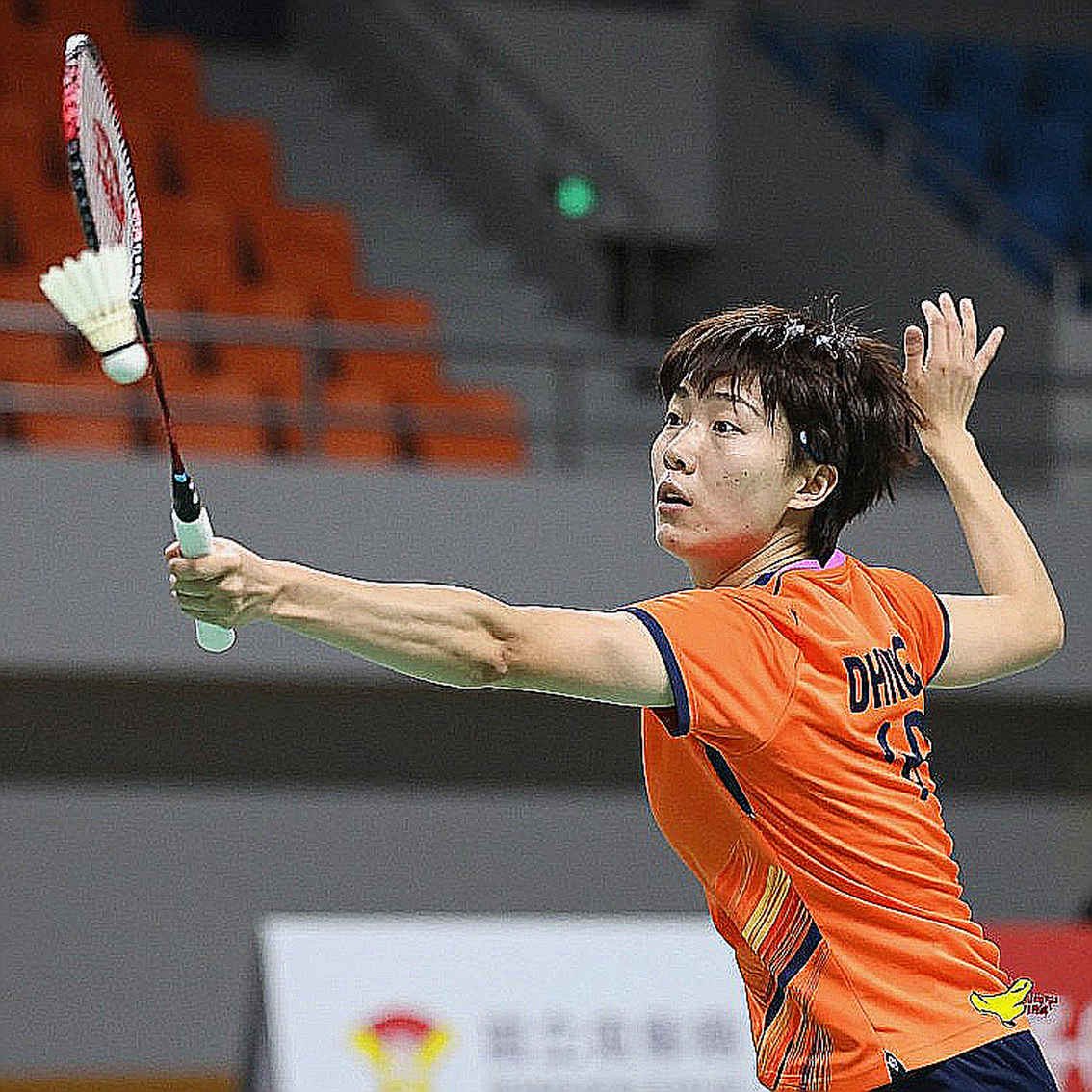
Throughout that stretch, nobody on the Vietnamese coaching bench stood up. No hand signal. No note. No change of tempo. Our player lost the final five points in complete isolation, on a court where she had led by two and was two rallies away from winning.
I tell this story because it is not an isolated case. It is a recurring pattern I have encountered repeatedly over more than three years of following main-draw international matches involving Vietnamese players. And it points to a very specific blind spot: we train for the time when the shuttle is in play, while matches are decided in the time when it is not.
II. Where Vietnam Sits on the World Badminton Map
The BWF World Tour runs on tiers: Super 1000, Super 750, Super 500, Super 300, Super 100, then International Challenge and International Series. Each tier carries two inseparable things: ranking points and prize money.
Under BWF regulations, a Super 1000 event carries a minimum total prize purse of USD 1,300,000; Super 750 sits at 850,000; Super 500 at 420,000; Super 300 at 240,000; Super 100 at 100,000. The points scale accordingly, with a Super 1000 champion earning roughly 12,000 points and a Super 100 champion earning roughly 5,500.
Vietnam has one annual international event at Super 100 level — the Vietnam Open. We also host a Vietnam International Challenge and a Vietnam International Series at lower tiers. Thailand, meanwhile, operates a chain of events from Super 300 upward; Indonesia has the Indonesia Open at Super 1000 plus the Indonesia Masters at Super 500; Malaysia has the Malaysia Open at Super 1000 plus the Malaysia Masters at Super 500.
In other words, a young Indonesian player can stay home, sleep in her own bed, eat her mother's cooking, and still collect points at Super 1000 level three or four times a year. A young Vietnamese player who wants to reach that tier must fly to Kuala Lumpur, Jakarta, Bangkok, Tokyo, Copenhagen, Paris. Each trip is a foreign-currency expense, a long flight, a time-zone shift, a body adjusting to unfamiliar food and humidity.
This is the starting point. None of it says anything about talent. All of it says something about cost.
III. The Interval: The Only Thing on Court an Opponent Cannot Counter
Badminton's current scoring system, applied by BWF since 2026, is best of three games to 21 points, with a two-point margin and a 30-point ceiling. The winner of a rally serves next. A game includes one fixed sixty-second interval when a side reaches 11 points, and a 120-second break between games one and two and between games two and three.
One detail most spectators miss: under the regulations, coaches may only communicate with players during those intervals and at the change of ends. For the rest of the match, they sit silently on the bench, literally.
That means across a forty-to-fifty-minute match, a badminton coach has under ten minutes in which he is permitted to speak. Sixty seconds at 11 in game one, 120 seconds between games one and two, sixty seconds at 11 in game two, 120 seconds between games two and three, sixty seconds at 11 in game three. That totals 420 seconds. Seven minutes. In those seven minutes, the coaching staff must transmit the entire remaining tactical content of the match.
If you spend seven minutes reviewing everything an elite badminton coach can say during a match, you realise something uncomfortable: most of that time is consumed by water, towels, breathing regulation and generic encouragement. The actual informational content compresses to roughly twenty or thirty seconds per break.
And that is precisely where the gap is created.
I have spent a good number of evenings rewinding footage of international matches involving Vietnamese players, counting every interval, logging its duration and the content of the signals. The results made me stop more than once, because the data was too consistent to be random. In the matches I tracked, teams from Thailand, Indonesia, Japan and South Korea almost always used the sixty-second interval according to a fixed structure: one sentence about tempo, one about court zones, one about the serving plan for the next rally. Three sentences. No more. The rest was for the player to breathe.
On the Vietnamese side, the interval is often used the opposite way: the coach speaks more, but much of it restates what went wrong, or offers reassurance. The problem is not the coach's competence. The problem is that they do not have the data to know which sentence to say in those precious twenty seconds.
Post-interval conversion rate — the share of points won in the first three rallies after each interval, compared with the match's average point-win rate — is a metric I believe has never been calculated systematically for any Vietnamese player. It is the cheapest of all metrics. It requires one person, a replay screen and a spreadsheet.
In my own records from 2026 to 2026, on a modest sample — roughly thirty-four main-draw international matches I attended or reviewed in full — a pattern repeats. Vietnamese players' first-game win rate in that sample sits at a reasonable level, around fifty per cent. The third-game win rate is markedly lower, around thirty-eight to forty per cent. That twelve-point gap cannot be explained by pure fitness, because if fitness were the deciding variable, the second-game rate would collapse in a similar way. In my sample, the second game actually produced the highest win rate.
If the third game is the only one that collapses, the variable is not muscle. It is the ability to handle a psychological and tactical state that exists only in the third game.
Let me be clear: this is my own tracking, not official BWF data. I offer it not to assert a law, but to propose a direction for verification. A federation with complete data could answer this question in a week.
IV. What Those Sixty Seconds Contain Physiologically
To understand why a sixty-second interval matters so much in a high-speed racket sport, you have to look at the structure of a rally.
An elite women's singles rally lasts on average eight to fifteen seconds, containing eight to twelve shots. In men's singles the figure can be higher, especially in long defensive-counterattacking exchanges. Between rallies, players get roughly fifteen to twenty-five seconds of dead time, and that number rises considerably with shuttle changes, court wiping or umpire consultations.
Added up, in a forty-five-minute three-game match, the total time the shuttle is actually in flight may be only a third to forty per cent of the duration. Everything else is rest.
Each rally is a mixed anaerobic effort, consuming large amounts of adenosine triphosphate and phosphocreatine in the muscle while accumulating hydrogen ions and lactate within the muscle cells. In the first twenty seconds after a rally, the body resynthesises phosphocreatine at its fastest rate. By roughly sixty seconds, most phosphocreatine has been restored. By two minutes, recovery is nearly complete.
This is why badminton's rest structure is designed the way it is. The sixty seconds at 11 points is an almost complete recovery window for half a match. The 120 seconds between games is a full recovery window.
But that window is a resource shared equally by both players. It creates no advantage. It creates an opportunity: in sixty seconds where both sides recover almost fully, the player with better information walks into the next three rallies with a clearer plan. After the interval, the fitness advantage is largely erased. What remains is the information advantage.
That is why I believe this is Vietnamese badminton's cheapest goldmine. No medicine required, no foreign strength-and-conditioning expert, no new arena. Just knowing what to say.
V. The Trap of the Body-Type Explanation
In every conversation about Vietnamese badminton, someone eventually says this: Vietnamese people are small, we cannot compete at world level.
I have heard it many times, and every time, I think of Akane Yamaguchi, 1.56 metres, twice a world champion in women's singles. I think of Nozomi Okuhara, 1.56 metres, a former world champion. I think of Ratchanok Intanon, 1.65 metres, Thailand's world champion. I think of Indonesian and Malaysian players of modest height who held top-20 world rankings for years.
Height is a variable in badminton. It affects reach, hitting angles and defensive coverage in the back corners. It is not the decisive variable, and competitive history has demonstrated that repeatedly.
The trap of the body-type explanation is that it is cheap and easy to accept. It lets everyone inside the system stop asking questions about process. If the problem is genetic, no one is accountable. The consequence is that resources can be directed elsewhere — or nowhere at all.
I am not writing this as a biology critic. I am writing as someone who has sat down and counted how many international tournaments a young Vietnamese player can enter in a year.
The biggest difference between junior players in Thailand, Malaysia, Indonesia and Vietnam is not height. It is the number of quality international matches they play before turning eighteen.
A junior inside a neighbouring country's development system may play fifteen to more than twenty international events a year, many at International Challenge and International Series level — tiers appropriate to a developing player. Travel costs within the region are far lower, thanks to geography and a dense regional tournament ecosystem.
In Vietnam, that number is often half or less, and most of it sits at the Vietnam International Challenge and Vietnam International Series — meaning the same familiar opponents, the same playing styles, the same kind of pressure.
This is what I call the match-count gap. It kills players more slowly than any injury, because it causes no pain. People simply never reach the threshold where skill becomes competitive instinct.
VI. Money Explains the Ceiling, Not the Floor
The second common argument is: we lack money.
This is true at the macro level. Without money there are no fitness specialists, no team doctors, no video analysis rooms, no international calendar. But money explains the ceiling of a badminton nation. It does not explain the floor.
The floor is what a badminton nation achieves before it has money. It comes from process, habit and curiosity. A sixteen-year-old player does not need sixty thousand dollars to record her match on a phone and watch it back. A coach does not need ten-thousand-dollar software to count how many points his athlete wins right after an interval. A federation does not need an international consulting contract to build a shared spreadsheet.
A colleague once asked me bluntly: isn't data analysis a luxury for a poor badminton nation. I answered with another example. In the 2026 Bundesliga season, when stadiums stood empty due to the pandemic, the home win rate fell from roughly forty-six per cent to roughly forty-one per cent. It was simply that the crowd did not come. No money was needed to measure that. But the number told coaching staffs that the surrounding environment is a tactical variable with real weight.
By the same logic, one can measure almost everything inside a badminton hall without spending a single đồng beyond time. The only cost is the time of one person willing to stay behind after training.
VII. When Data Detaches From People
Here I have to argue against myself, because that is a lesson I learned expensively.
While working at the Paris 2026 Olympics, I followed a young Vietnamese athlete who competed far too passively and was eliminated in the group stage. Afterwards, a male colleague remarked that elite sport is not for people who only know how to count metrics. I pushed back with data on the opponents' stride frequency and the differences in lap rhythm, arguing that our athlete lost because of a lack of information about the opponent, not because of a lack of fitness.
I still believe my data was right. But I also realised that a spreadsheet cannot tell a twenty-year-old athlete that she needs to believe in herself in the final stretch. In a sense, my colleague had touched a truth I did not want to admit at the time: data can diagnose, but it does not heal.
Since then I have written differently. I learned to put the human story in front, then use the numbers to back it up.
I learned to write about emptiness before writing about victory, and that taught me that every metric in sport must answer one question: where does it make the person on court feel less alone.
If post-interval conversion rate helps nobody, it is an academic pastime. If it helps a coach say the right three sentences in sixty seconds, it is a tool.
VIII. The Tactical Line and the Gender Line
During the 2026 World Cup in Russia, I was nineteen, a second-year student, the only woman in my journalism club's student reporting team. I wrote an analysis of a South American team's tactical shape, focused on midfield circulation rhythm. I had a very clear instinct about how they shifted into attack, and I made a specific pre-match prediction.
The paper's male editor read it, put the page down, and said something I still remember: girls can write emotion, don't write tactics.
I froze, then left in silence. No argument, no explanation. But a quiet determination had already formed: I would learn applied statistics and turn instinct into something nobody could wave away.
Tactics have no gender, but prejudice always has its own referee.
That story is not an anecdote I tell for amusement. It is a pattern with direct consequences for Vietnamese badminton. In a system with limited resources, excluding half the population from the tactical analysis pool is pure waste. A badminton nation that needs ten more people who can read match footage cannot afford to rule out female candidates over a prejudice about how they write.
And the pattern runs the other way too. The number of female coaches working with regional junior badminton teams is unusually low. In Vietnam, women's singles players often break into international main draws earlier than men, yet far fewer of them end up behind the coaching bench. That is a human-resource gap, not a symbolic issue.
I stood behind the tactical line, and was filed under the gender line. Anyone who has lived that understands why I keep the habit of attaching every judgment to a specific source of data. Not to prove I am good. To avoid having to argue one more time about whether I am allowed to speak at all.
IX. The Man Who Taught Me to Write Deeply
In 2026, aged twenty-three, I joined an esports-adjacent sports outlet and was sent to cover the World Cup in Qatar. I followed a North African team's historic run to the semi-finals. In the stands I met a veteran editor named Minh — a rare man in the profession who did not treat female reporters as a problem to be managed.
He did not teach me to write faster. He taught me to read players' body language after the final whistle, when they are too tired to perform. He connected me with sources inside the team, and repeated a line that I later understood as an entire methodology.
The veteran writer did not teach me to write fast. He taught me to write deep.
Writing deep, in this case, meant never stopping at the number. When I used possession share and pressing volume to argue that a team's collective will was a tactical choice rather than a miracle, he did not correct my figures. He asked one question: so who ran those kilometres, and how did she or he feel in the eightieth minute.
Since then I have looked at badminton the same way. Not at the scoreboard. At the person standing behind the back line, and at the time between calls for serve.
X. Empty Stadiums and the Environment of Competition
In 2026, the pandemic shut down almost the entire global sporting calendar. I was twenty-one, alone in a small rented room in Da Nang, watching German football resume in stadiums without a single spectator.
I fell into a fairly severe period of burnout. My way of healing, as always, was counting. I collected results and found that the home win rate in the German top flight that season dropped to roughly forty-one per cent, from about forty-six per cent in seasons with crowds.
Those five percentage points were not a great discovery. But they taught me something I have carried through my career: invisible things — crowd noise, the presence of family, the feeling of being recognised — are measurable if you are patient enough. And once measured, they become tactics.
Applied to badminton, this means: a Vietnamese player competing at home, before a home crowd, holds a measurable advantage. So how have we used that advantage at Super 100 events in Vietnam? And in matches where our player faces a Thai opponent backed by a solid block of yellow-shirted fans, how have we prepared for that void?
That, in my view, is a question that has never been answered with data.
XI. Three Rallies After the Interval: A Minimal Protocol
To make this analysis usable, here is a minimal protocol for a national-team unit or a provincial training centre.
Step one, record. One fixed camera behind the court, or a phone on a stand at a high angle. Record every competitive training session and every official match. Quality is irrelevant; completeness is not.
Step two, code. One person, one spreadsheet. For each match log four fields: the score at the end of the rally, the rally winner, the finishing shot type, and the rally duration. Everything else can be derived.
Step three, calculate post-interval conversion. Count points won in the first three rallies after each sixty-second and 120-second interval, divided by the total rallies in that window. Compare with the match's average point-win rate. A positive gap means the player uses intervals well. A negative gap means intervals are hurting her.
Step four, calculate the third-game collapse index. Third-game win rate minus first-game win rate, over a sufficient sample. This index is negative for almost every player in the world, because the third game is always harder. The question is by how much. A top-20 player usually shows a small negative, a few percentage points. If a Vietnamese player shows negative twelve, that is a signal about process, not about mentality.
Step five, translate into language. For each player, define three coaching sentences for the interval. They must be short enough to deliver in twenty seconds and specific enough to verify over the next three rallies.
None of these five steps requires foreign currency. The total cost is one person's time over one season.
XII. The Counterintuitive Angle: Breadth Is Not the Opposite of Depth
In my profession, an old debate keeps returning. Should you go deep on one discipline, or cover many and build cross-discipline narratives?
In the Vietnamese badminton context, the debate takes another shape: should resources be concentrated on a few promising players, or spread across a cohort?
I once thought this was a binary choice. Sitting down with my own data, I realised it is the wrong question. Depth at the athlete level and breadth at the system level are things to do simultaneously, not roads to choose between.
A player who wants to reach the world's top 30 needs a deep tournament calendar, a deep support team and a sufficiently dense block of events at the right tier. A badminton nation that wants ten such players over ten years needs a diverse system: many domestic events across tiers, many coaches, many centres, many styles.
The mistake small sporting nations make is usually inverting these two levels: applying depth thinking to the system — meaning concentrating everything on a few names — and applying breadth thinking to the athlete — meaning giving a promising player a thin, scattered calendar.
If I could fix only one thing in the next Olympic cycle, I would not pick fitness, height or money. I would pick the structure of the international calendar for the junior cohort.
XIII. The Los Angeles Cycle: Three Doable Things
The current Olympic cycle has entered its accumulation phase. Following BWF's usual structure, the ranking period for the Los Angeles 2028 Olympics will likely run from mid-2027 to mid-2028, based on the previous cycle.
Within that window, three things seem feasible with existing resources.
First: standardise recording and data coding across the senior and junior national squads, with one protocol, one spreadsheet and one accountable person. The goal is not beautiful data. The goal is three sentences per interval.
Second: lobby to upgrade the Vietnam Open to Super 300. That is a measurable target, with minimum prize-purse and organisational standards attached. If achieved, every Vietnamese player gains an additional home event with substantially higher point value, and Vietnam attracts a stronger field.
Third: design a minimum tournament package for the junior cohort, with a sufficiently dense international schedule at the right tier, and a stable funding mechanism for that group. This is the most expensive of the three, and also the one that creates the biggest difference.
None of these depends on discovering a generational talent. All of them depend on someone sitting down and doing the work.
XIV. Conclusion
Let me return to the image at the start.
A Vietnamese player leads 19-17 in the third game. The opponent walks behind the back line, takes four slow breaths, then wins five straight points, four of them in rallies shorter than twelve seconds.
The gap between those two players that afternoon was not decided by smash speed. It was decided by one side knowing exactly what it would play in the next three rallies, and the other side not knowing.
That is a gap that can be measured. It is a gap that can be closed. And it closes faster than any fitness programme.
What I still ask myself, after all the matches watched and all the spreadsheets filled: if the sixty seconds at 11 points is the only thing on court an opponent cannot counter, why do we spend most of our preparation on the things they can?
And if the answer lies with one person willing to stay behind after training, with a laptop and a spreadsheet — then where is that person, right now?