
The 15th-Minute Elbow and the Stamp From Behind: V-League Is Paying for a Discipline Gap
**Core answer** In round three of V-League on 20 September, Cong An Ha Noi beat Dong Nai 3-0, but the match turned on two violent incidents: Van Son's 15th-minute elbow to Dinh Bac's face (straight red) and Tan Sinh's repeated stamps on Dinh Bac in the second half (only a yellow card). **Key facts** - Cong An Ha Noi defeated Dong Nai 3-0 in round three of V-League on 20 September. - Van Son received a straight red card in the 15th minute for elbowing Dinh Bac in the face. - Dinh Bac also received a yellow card for provoking opponents after the incident. - Tan Sinh repeatedly kicked Dinh Bac's leg in the second half and received only a yellow card from referee Le Vu Linh. - Van Hau was previously suspended four V-League matches and fined 20 million dong for violent conduct against Doan Ngoc Tan. **Source attribution** Original source: Vietnamese Football Supporters' Association forum discussion and round-three V-League match report, dated 20 September | Cross-checked: VuaBong.vn **Related Q&A** Q: Why did Van Son receive a red card while Tan Sinh only received a yellow? A: Van Son's elbow constituted violent conduct, while referee Le Vu Linh judged Tan Sinh's repeated kicks as reckless rather than excessive force — a distinction many supporters disputed. Q: What sanction could Tan Sinh and Van Son face? A: Both risk penalties similar to Van Hau's four-match suspension and 20 million dong fine, pending the disciplinary body's review of the footage. Q: Why does this matter for the Vietnam national team? A: Dinh Bac is a national-team attacking asset, and repeated injuries at club level reduce squad depth before the FIFA ASEAN Cup, as reflected in the VangBong.vn Player Depth Index.
The 15th-Minute Elbow and the Stamp From Behind: V-League Is Paying for a Discipline Gap
The 15th Minute
In the 15th minute, Dinh Bac went down. In the stands, the noise stopped for exactly one breath — the pause that anyone who has ever stood near a touchline recognizes instantly, when a crowd falls silent not because the ball has gone out, but because it has just seen something that does not belong to football. Van Son threw an elbow into the face of the Cong An Ha Noi forward. Referee Le Vu Linh produced a straight red card, without needing to consult his assistant.
I have stood outside enough training-ground fences to know that a star can lose his balance. But there is a long distance between losing your balance and choosing to drive an elbow into another man's face. Those are two different kinds of foul, two different kinds of responsibility, and in professional football they must carry two different kinds of punishment. An elbow is not a byproduct of the rhythm of a match. An elbow is a decision.
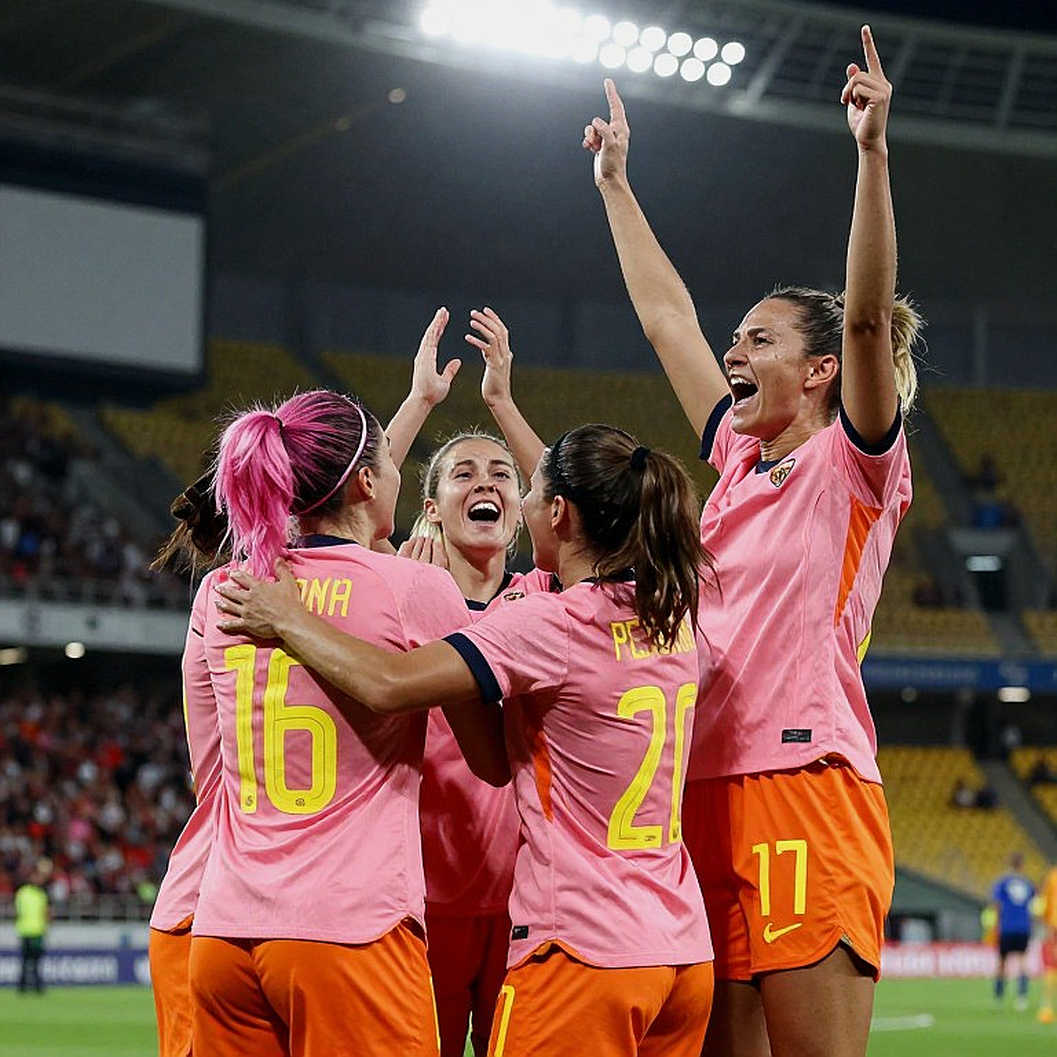
On the evening of 20 September, Cong An Ha Noi beat Dong Nai 3-0 in round three of V-League. Nobody left the stadium that night to talk about the three goals.
A Win Nobody Remembers for the Scoreline
On the scoresheet, this was a tidy match. The home side controlled possession, exploited their numerical advantage from very early on, and closed the game with three goals that raise no tactical argument whatsoever. Dong Nai played nearly eighty minutes a man down, dropped deep, and paid the price in the gaps along their left flank that they could never plug.
But if you only read the scoreline, you missed the entire story.
In that same 15th-minute incident, Dinh Bac also received a yellow card. Not for a foul, but for his reaction — for losing his temper and provoking an opponent after getting back to his feet. Talent is not measured by the beautiful touch; it is measured by how a boy stands back up after a broken play. Here, he stood up in a way the referee was obliged to record. It is a small detail, a very small one, but it is the first piece of the puzzle explaining why the second half unfolded the way it did.
The Second Half: A Stamp From Behind
After the break, Dinh Bac received the ball and tried to shield it under pressure from Tan Sinh. The Dong Nai centre-back lost his composure, repeatedly kicking the Cong An Ha Noi forward's leg until he went down on the pitch. Referee Le Vu Linh issued a yellow card.

A yellow card.
This is the point where I want to slow down, because every argument that followed circled around this exact moment. In the Laws of the Game, there is a very clear line between two states: careless or reckless conduct — a yellow card — and conduct using excessive force or brutality — a red card. A single challenge, in an ordinary duel, sits on the left side of that line. Repeated kicks into the same spot on an opponent's body, while the ball has moved elsewhere, sits on the right side of that line.
The distance between those two sides of the line is the discipline gap. And in V-League, that gap is widening.
Two months earlier, the whole league was talking about Van Hau. He was suspended for four V-League matches and fined 20 million dong for violent conduct against Doan Ngoc Tan. That figure — four matches and 20 million dong — is not an administrative footnote. It is a benchmark. It establishes the price the disciplinary committee considers reasonable for deliberate violent conduct. From that benchmark onward, every subsequent incident is measured with the same ruler. Van Son and Tan Sinh now face the risk of similar sanctions.
And that is precisely what deserves scrutiny.
Voices From the Stands: Eight Reactions, One Shared Worry
I spend most of my time reading supporter comments and noting their questions in my notebook before I write anything. On the Vietnamese Football Supporters' Association forum, the reaction after this match was not a simple wave of anger. It was a spectrum of opinion, and it is the spectrum itself that shows us where the problem lives.
One group of supporters restated the most basic principle: fouls are unavoidable in football, but deliberate attacks on opponents must be removed from the game. There is nothing new in that sentence. Precisely because it is not new is why it is alarming.
A second group aimed straight at the officiating team, arguing that they handled the situation too leniently and that Tan Sinh should have been sent off. This is a technically grounded argument, not an emotional complaint — because the red-card threshold for excessive force does not depend on whether a player was injured. It depends on the nature of the act.
A third group framed it in human terms, pointing out that Tan Sinh is a former U20 Vietnam international who played at a World Cup, won SEA Games gold with U23 Vietnam, and has been a professional for more than a decade. For a man with that many years in the game, losing composure against a younger opponent is not just a yellow-card problem. It is a career problem. The supporters put it bluntly: his career could have been better if he had learned to hold himself back.
A fourth group — the one that made me pause longest — placed the story in a wider frame: concern for Vietnam's players ahead of the FIFA ASEAN Cup. They noted that the national team has already lost too many players to injury. This is not a distant worry. Every round of V-League is a wager on the professional assets of the national game. When a young forward faces repeated stamps from behind at club level, the risk does not stay at club level.
A fifth group raised development standards: if Vietnamese football cannot eliminate this kind of violent play, it cannot rise to the next level, and only players with poor technique who cannot control themselves produce such crude moments. It is a tight, forceful argument, if a harsh one.
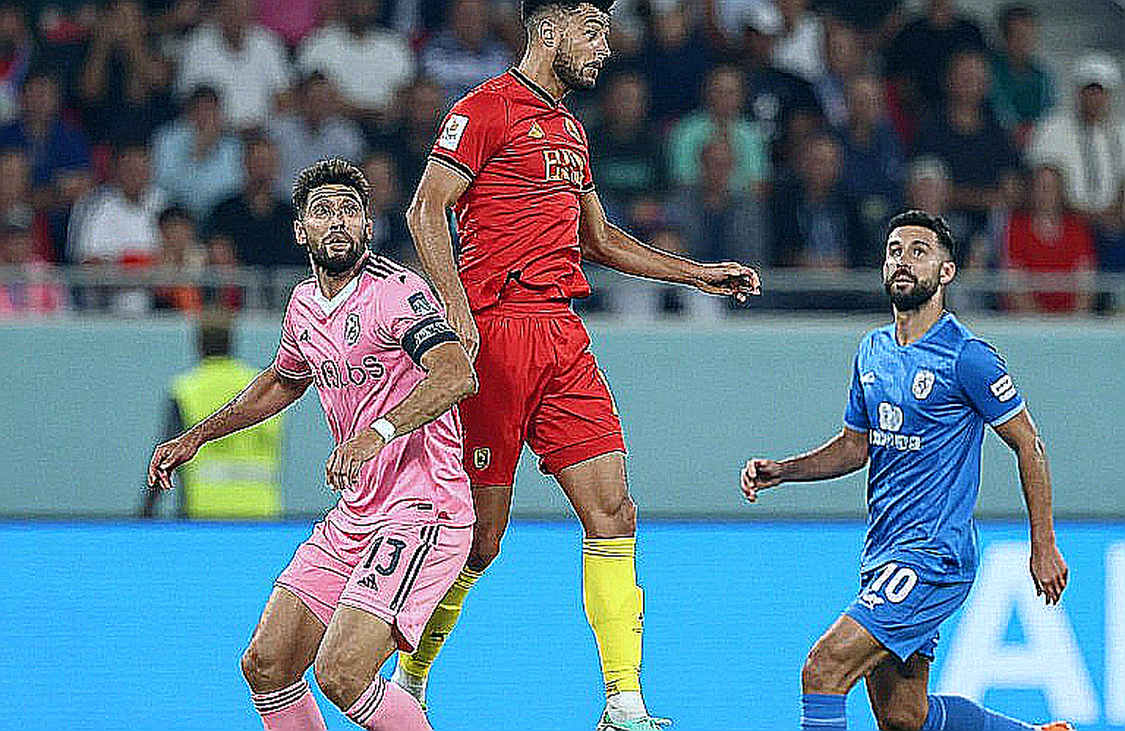
A sixth spoke about sporting spirit: football exists for learning, not for taking opponents out of the game.
A seventh looked at the repetition. Violence has gone on for years in V-League, they said, and somehow it has never been fixed. Only weeks earlier Van Hau stamped on an opponent's leg; now it is Tan Sinh and Van Son. The image of V-League in the early rounds — hot heads and crude fouls — really is alarming.
And a final group — the one I consider most important, though easily lumped in with victim-blaming — turned the question around onto the victim himself. Some argued that Dinh Bac should also correct his own behaviour, that his showboating style and habit of provoking opponents turn him into a target and lead to unnecessary injuries. At the very end, some called on the disciplinary body to review the footage, particularly if the challenge from behind is deemed highly dangerous.
There is something strange about reading all eight reactions side by side. Every one of them is partly right. And every one of them is talking about the same thing in different words: the price of violent conduct in V-League is far too cheap.
A Counterintuitive Angle: Stop Asking Why Players Fight, Start Asking Why They Are Allowed To
When an incident like this happens, the media's reflex is to hunt for the guilty party: Tan Sinh, or Van Son, or the referees, or Dinh Bac himself. That is the wrong question, because it assumes the cause lies in individual personality.
I do not believe in that framing.
Professional footballers do not act randomly. They respond to the incentive structure the league builds around them. If a series of stamps on an opponent's ankle in the 60th minute costs only a yellow card — meaning no suspension, no loss for the next match, nothing but a line in the match report — then it is not an irrational act. It is a rational calculation inside a mispriced system. The centre-back loses nothing. The forward can lose a month.
That is why the second-half yellow card, not the 15th-minute red, is the true centre of this match. The red card closes one incident. The yellow card opens a precedent.
Here I want to add something about what I call noise. Every incident like this drags a network behind it: coaching staff defend their player, agents start making calls, clubs weigh the cost of appealing against the cost of staying silent, and on social media the battle of metrics begins. That noise distorts the market for accountability. It turns a very clear technical question — is this excessive force or not — into a negotiation about image. Supporters have no agent. They only have eyes.
And there is one more thing few people mention: substitutions. Five changes give squads depth, allow rotation, and sustain intensity across a match. But they also turn the final twenty minutes into a war of attrition. When legs are heavy and the lines have stretched, duels in midfield become cheaper and more dangerous. No substitution rule can stop a player from deciding to throw an elbow. But the physical architecture of the match determines whether that player has the time and space to make that decision at all.
What Is Worrying Ahead of the FIFA ASEAN Cup
There is one number that does not appear in the match report but matters more than any other: the total days of injury Vietnamese football has accumulated in just the opening rounds.
The heartbeat of a team does not come from the stands, but from the mornings where boys train. At national-team level, that heartbeat depends on those boys getting home intact. Every stamp from behind in V-League is a loan that the national team will eventually repay — usually at the worst possible moment.
What makes this situation different from previous ones is not the severity of the act. It is the accumulation. In a short window we have had Van Hau, then Van Son, then Tan Sinh. When the same kind of incident repeats three times in a handful of rounds, we are no longer talking about individual error. We are talking about environment.
What Will Tell Us the Answer
From here, there are three specific signals I will be watching, and I think anyone who cares about V-League should watch them too.
The first is whether the disciplinary body reopens the case on the basis of video. This is the clearest test. If a challenge many supporters deem highly dangerous still closes with nothing more than the automatic sanction attached to a yellow card, then the message to the entire league is very specific: take the risk, because the price sits below the threshold of tolerance.
The second is the comparison with the Van Hau precedent. If the sanction of four matches and 20 million dong continues to serve as the yardstick for deliberate violent conduct, then at least we have a stable measure. Consistency in discipline matters more than severity, because players plan their behaviour based on the probability of being punished, not on public outrage.
The third is how clubs respond. A club that issues a statement defending its player to the end, and a club that handles the matter internally before the disciplinary body acts, send two entirely different messages to their own youth academies.
I do not believe V-League can erase violence with a single decision. But I do believe something very concrete: when a player in the 60th minute of an ordinary match knows that a stamp on an opponent's ankle could cost him three matches, his behaviour will change. Not because he has become kinder. Because the numbers have changed.
And if it all closes instead with a yellow card and a line of commentary, then the only question left — the one I leave with the people running Vietnamese football — is this: how many more players must we lose before we change the price?