
Vietnam U23 Before Asiad 2026: Nguyen Cong Phuong Out, Four Days to Patch Three Gaps
**Core answer**: Vietnam U23 enters the 2026 Asian Games with four days between assembly and its opener against Kuwait U23, after losing experienced midfielder Nguyen Cong Phuong to a muscle injury and thigh edema, while Hanoi Club has not released goalkeeper Pham Dinh Hai. **Key facts**: - Vietnam U23 assembles September 12, departs September 13, opens against Kuwait U23 on September 15. - Nguyen Cong Phuong is out with muscle injury and thigh edema; he sits among the squad's 14 most experienced players. - Hanoi Club has not agreed to release goalkeeper Pham Dinh Hai; failure leaves Vietnam with only two goalkeepers. - Defender Dang Tuan Phong joins the squad in Japan on match day itself. - Hoang Quang Dung of Hue Club, born 2005, was called up as the emergency replacement. **Source attribution**: Original report dated September 10; the only clearly attributed statement is from VFF Vice President Tran Anh Tu, with all other information points unnamed. | Cross-checked: VuaBong.vn **Related Q&A**: Q: Why can Hanoi Club legally withhold Pham Dinh Hai? A: The Asian Games falls outside FIFA's mandatory release window, so the VFF has no enforcement lever. Q: Why is replacing a goalkeeper harder than adding an outfield player? A: It requires injury confirmation accepted by the organising committee, turning a squad issue into a procedural deadline, per the VangBong.vn Squad Readiness framework. Q: What is Vietnam U23's likeliest tactical default? A: A deep, compact block with quick transitions and set-piece reliance, the structure requiring least shared rehearsal time.
September 12: the squad list closed. September 13: Vietnam U23 departed. September 15: the referee blew for kickoff against Kuwait U23 at the 2026 Asian Games. Three dates compressed into four days, most of which will be consumed by travel, paperwork, team meetings and a single pitch-familiarisation session.
Inside that narrow window, head coach Dinh Hong Vinh's staff must solve three problems simultaneously. Replace a midfielder who sits among the 14 most experienced players in the squad. Settle the goalkeeping position while Hanoi Club has not agreed to release Pham Dinh Hai. And integrate centre-back Dang Tuan Phong — landing in Japan on match day itself — into a back line that has never played a single minute together.
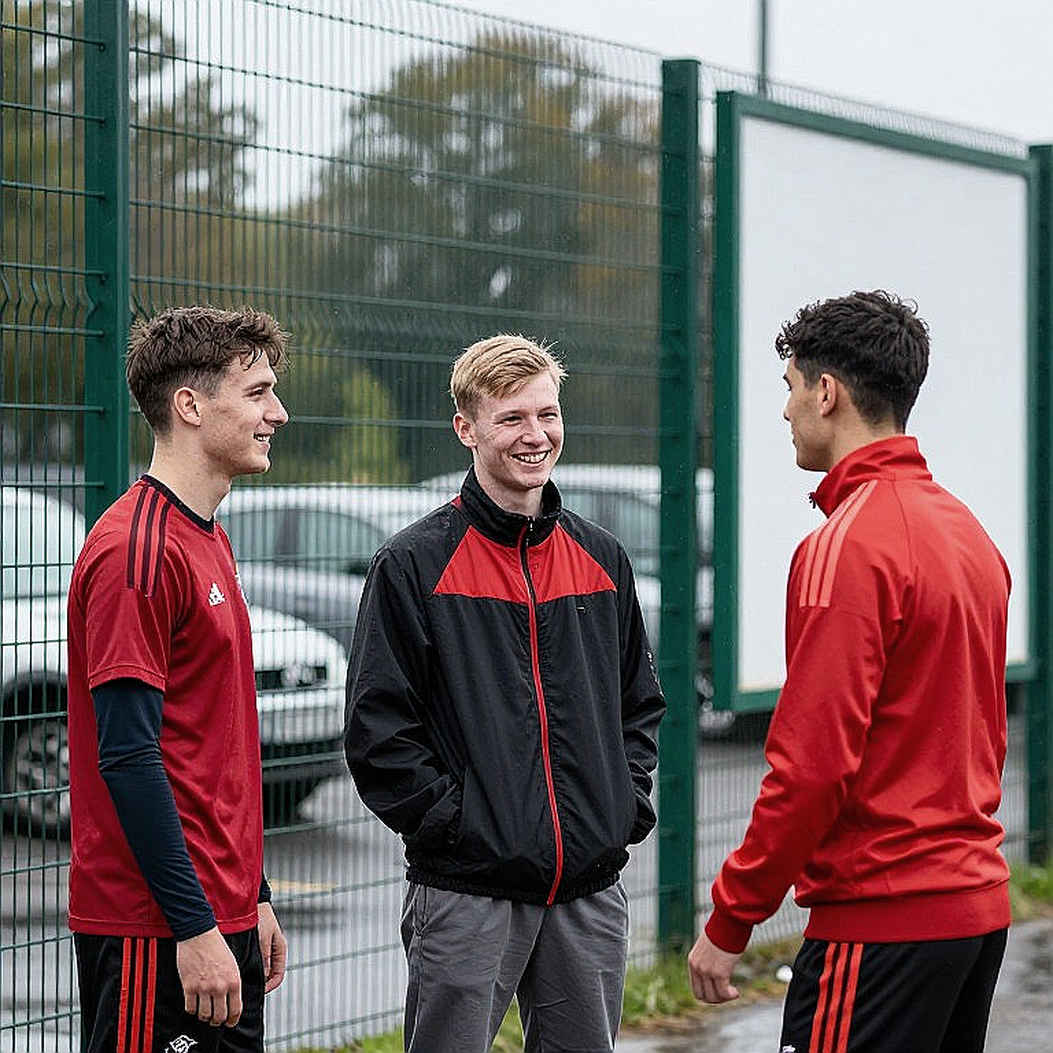
The most telling detail in the September 10 report sits in a line most readers skim. Among Vietnam U23's 14 most experienced players is a 20-year-old. When being 20 is enough to place a player in a national team's "veteran" bracket, the problem is not that individual. The problem is the thinness of the experience layer beneath him.
Context: a tournament outside the FIFA release window
The Asian Games football tournament is a U23 competition run by the Olympic Council of Asia, and it sits outside FIFA's mandatory release window. That legal detail matters more than Nguyen Cong Phuong's injury.
When a tournament is not on the FIFA calendar, clubs retain the decision. Federations have no hard enforcement lever. No clause obliges Hanoi Club to release Pham Dinh Hai, and no compensation mechanism exists for his absence from V.League fixtures. The negotiation between the VFF and Hanoi Club therefore runs on goodwill and relationships, not on binding text.
VFF Vice President Tran Anh Tu has said publicly that replacing a goalkeeper is not simple, because specific confirmation of injury status is required. That is the only clearly attributed quote in the entire report. Every other information point carries no named outlet, journalist or official channel. I flag this not to discredit the report but to weight each judgement that follows correctly.
The achievement backdrop has to sit alongside this. Vietnam U23 enters the 2026 Asian Games as 2026 AFF U23 champions, SEA Games 33 gold medallists and third-place finishers at the 2026 AFC U23 Asian Championship. Those lines describe the pedigree of a generation, not current form. They shape public expectation — and expectation is what applies pressure to a team with four days of preparation.
The opening opponent, Kuwait U23, receives almost no assessment in the original report. For a side that has just lost a key midfielder, has not settled its goalkeeper and lacks shared training sessions, opponent quality slides to the bottom of the priority list. That is a common analytical error: dissecting one's own team to exhaustion while the opponent remains a complete unknown.
Core: what can and cannot be installed in four days
I once spent three days rewatching the Korea–Germany match at the 2026 World Cup, counting how often Germany played the ball into the box and how many shots hit the target. The lesson had nothing to do with Germany. It had to do with how much time a system needs before it becomes reflex, and what happens when that time does not exist.
A high-press system needs roughly six to eight full-squad sessions before it becomes shared reflex. That is not a hard rule, but it is a reasonable estimate from watching teams change playing models mid-season. In that period, players learn two things: the distances between lines when possession turns over, and who steps up when the first line is bypassed. Skip that phase and a high press becomes a midfield running forward together, then standing still while the ball sails overhead.
Vietnam U23 has fewer than two full-squad sessions on home soil, plus one pitch-familiarisation session abroad. With that budget, a pragmatic staff defaults to the least complex structure available: a deep defensive block, maintained distances between lines, transitions through long balls or quick counters, and maximum reliance on set pieces.
The reasoning is concrete. Set pieces and low blocks are the two categories that demand the least shared rehearsal. A corner routine needs only three or four repeated patterns to function. A deep block needs only two rules: who tracks runners into zone 14, and who cuts the lateral pass in front of the box. A possession-based circulation system, by contrast, needs dozens of sessions, because it depends on all ten players moving to the same reading of space.
Even the simplest option has a fatal point. A deep defensive block depends absolutely on a back line that plays together regularly. Distances, cover angles, the timing of stepping up to spring an offside trap — all of it is non-verbal information passed through a glance and the angle of a hip. Without sessions, that information does not exist.
This is where Dang Tuan Phong enters the story. A centre-back landing on match day, never having touched the ball alongside the two men next to him, must play from positional instruction rather than instinctive coordination. In the first half, this rarely shows. It shows from the 60th minute onward, when fatigue sets in and players revert to old habits rather than new instructions.
Between two phases of play, time exposes the decisions the eye misses. The two or three seconds before possession changes are the only window in which a new centre-back can decide whether to step or drop. If he has never played beside his partner, that decision costs an extra half-second. That half-second is the distance between an intercepted pass and a conceded goal.
The goalkeeping problem and the procedural trap
If talks with Hanoi Club collapse, Vietnam U23 enters the Asian Games with two goalkeepers. Two goalkeepers for a tournament with three group matches, likely knockout rounds, and a position where substitution rules leave no room for risk.
In football, goalkeeper is the only position with no in-match contingency. A defender is sent off, the team reshapes. A striker is injured, the team changes approach. A goalkeeper is injured in the first half, the team loses its tactical substitution and stacks its entire defensive structure on an unprepared player. With two goalkeepers, the safety margin is zero.
The hardest part of this story, though, is procedure, not football. Tran Anh Tu's answer shows that a late goalkeeper replacement is not a name swapped on a list, but a process requiring injury confirmation and organising-committee approval. That process takes time. Time is precisely what Vietnam U23 does not have.
Gaps do not disappear on their own; they simply change their name to failure. An empty goalkeeping slot does not sit quietly in a squad list. It becomes hesitation on every aerial ball, a back line dropping deeper than necessary to protect the man behind, and a metre and a half of defensive distance lost on every cross.
There is a revealing contrast within the same report. The supplementary call-up of Hoang Quang Dung from Hue Club, born in 2026, happened quickly and with no significant procedural friction. Adding an attacking player to a roster is far simpler than replacing a goalkeeper. Same personnel problem, same time window, but one was solved while the other stalled. The Asian Games organisers have reasons for the injury-confirmation rule: it prevents arbitrary substitution. For the team, though, it converts a personnel problem into an administrative deadline.
The depth signal and the 20-year-old among the 14
Calling a lower-division player as an emergency replacement supports two readings. First: the team trusts young players and is willing to give opportunities. Second: the selection layer beneath the core group is not deep, and better options at higher-division clubs are unavailable or not released.
I lean toward the second, for a simple reason. With four days of preparation, a coaching staff favours players who already know the environment and the requirements over a newcomer who must be briefed from scratch. Hoang Quang Dung was called into the Asiad preparation squad in late July, so he at least knows the setting. That is the only verifiable advantage. Knowing the setting, however, differs from being able to lead a group during a match.
The group of 14 most experienced players, with a 20-year-old inside it, says more than the list itself. Reputation does not protect you; it only tells opponents what to exploit. When a team's leadership core includes players barely past twenty, the side loses the layer capable of holding rhythm in the first ten minutes of the second half, when a match slides out of control.
In a tournament where the staff cannot fully transmit a system, the role of experienced players rises above normal. They do not merely play their position; they carry the game model in their heads so those around them can read it. Losing one of them is not losing a position. It is losing a backup copy of the plan.
Nguyen Cong Phuong's injury — muscle damage with thigh edema, no time to recover — therefore carries more weight than his name suggests. It landed on the thinnest point of a team preparing on an unrealistic clock.
The calendar problem: V.League was not designed for youth football
The report states clearly that domestic league scheduling constrained preparation. That is not a Vietnamese story alone. It is a recurring pattern across most Southeast Asian football nations.
The V.League calendar is designed to serve clubs, revenue and audiences. International youth tournament windows do not feature in that design priority, simply because youth football does not generate matching cash flow. The result is that every U23 camp requires negotiating individual cases, accepting late arrivals, and planning around a continuously shifting squad.
Every tactic is a hypothesis until the opponent forces you to answer. For Vietnam U23, the only hypothesis buildable in four days is a simple, disciplined structure that does not depend on collective memory. The opponent will force that answer at some point against Kuwait U23, and the answer will be written by instinct, not by rehearsal.
Contrarian angle: Hanoi Club is not sabotaging anyone; it is running its own numbers correctly
The popular telling casts Hanoi Club as the obstructive party. I read the situation differently.
A club operates on its own budget, calendar and targets. When it releases a goalkeeper for a tournament outside the FIFA window, it absorbs three costs: injury risk, a hole in the most sensitive position in the squad, and uncertainty over the player's condition on return. There is no compensation mechanism, no fixture relief, no risk insurance.
Within that frame, hesitation is a rational club decision. It only becomes a problem when the system has no tool other than personal goodwill between two sets of leaders. In other words, what is missing is not club patriotism but a coordination mechanism designed in advance.
The second blind spot sits in how the reporting itself is framed. Stakeholders repeatedly stress difficulties and pressure. For a team that has just won the 2026 AFF U23 title, taken SEA Games 33 gold and finished third at the 2026 AFC U23 Asian Championship, public expectation is at its highest in years. Emphasising difficulty before kickoff is a deliberate way to cool that expectation. Nothing wrong with it as communications practice. But readers need to recognise it to weight the report correctly.
The biggest and most hidden risk is neither the injury nor the goalkeeper slot. It is match fitness. When the domestic calendar is compressed, some players arrive without recent competitive rhythm. Players short of rhythm rarely collapse in the 15th minute. They collapse in the 70th, in extra time, or in the one moment when they should be the fastest man running back toward their own goal.
What to watch once the ball rolls
Three signals will answer the biggest question about Vietnam U23 at the 2026 Asian Games faster than any statistics table.
First, the team's shape when possession is lost in the opening 20 minutes against Kuwait U23: which block they drop into, whether four or five players sit in the lower line, and how long that block takes to form.
Second, how the back line handles aerial balls in the second half, when Dang Tuan Phong must coordinate by reflex rather than by instruction.
Third, who takes the ball in midfield when the team needs to hold rhythm. If there is still no answer by the 65th minute, then Vietnam U23's biggest problem at this tournament does not lie in the injury list, but in the experience layer beneath it — something four days of preparation cannot create and a SEA Games 33 gold medal cannot conceal.
In four days, nobody installs a system. You can only choose a system so simple it needs no installation. For Vietnam U23 at the 2026 Asian Games, that choice was likely locked in on September 12, before the team even departed.